

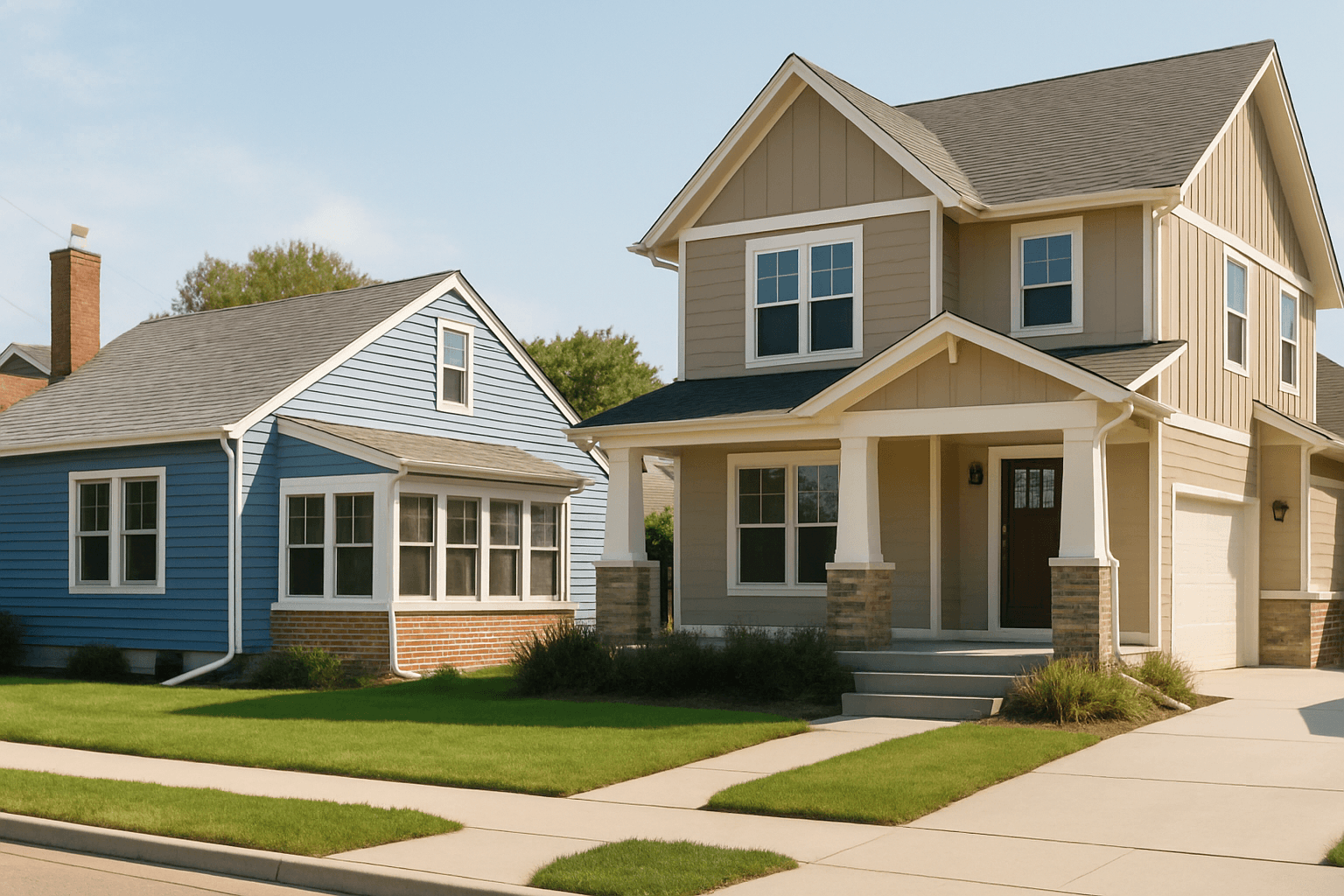
The average home addition in the United States now costs just over $50,000. The range runs from a $5,000 bump-out to a $400,000 second story. That spread is why "add on" is not one decision. It is six or seven different projects with different budgets, timelines, and permit paths. This home additions comparison Greeley CO homeowners can use walks through each option. You will see what each costs here and which one fits your lot.
Key Takeaways
- Ground-level additions cost less per square foot than second stories, but they take yard space and need a new foundation.
- Converting space you already own, such as a basement or garage, is the cheapest route to more usable rooms.
- Weld County adopted the 2024 building codes in June 2026, so permits, plans, and inspections apply to every structural addition.
The Seven Types of Home Additions, Compared
Every addition falls into one of two families. You either build new square footage or convert square footage you already have. Here is how each option stacks up for a typical Northern Colorado home.
Single-story bump-out or rear addition
A ground-level addition extends the back or side of the house. It is the most common choice for a bigger kitchen, a family room, or a main-floor primary suite. Expect roughly $150 to $350 per square foot with standard finishes. You pay for excavation and a new foundation, but the existing structure stays mostly untouched. Most families stay in the house during construction.
Second-story addition
Building up keeps your yard and works on tight lots. It costs more, usually $250 to $500 per square foot. The roof comes off, walls get reinforced, and a staircase takes space from the floor below. A full second story often runs $150,000 to $400,000. Many homeowners move out for part of the project.
Room over the garage
An over-garage bonus room is a middle path. The garage walls and slab already exist, so you skip the foundation. You still need engineering to confirm the walls can carry the load, plus insulation and a separate heating plan. It suits a home office, a guest suite, or a teen bedroom.
Basement finishing
If your home has an unfinished basement, this is the lowest-cost square footage you will ever add. Framing, drywall, flooring, egress windows, and a bathroom rough-in turn storage into living space. A finished basement in Greeley often adds 30 to 50 percent more usable area without changing the footprint.
Garage conversion
Converting an attached garage into a living room, gym, or studio uses existing walls and roof. The trade-off is parking. Front Range winters make many homeowners regret losing covered parking. A common fix is to pair the conversion with a new detached garage.
Sunroom or four-season room
Sunrooms are lighter builds with mostly glass walls, so they cost less than a framed addition. A three-season room is cheaper but unusable in January. A four-season room is insulated and tied into your HVAC, which makes it a real room for resale purposes. Budget $150 to $300 per square foot depending on glass and insulation.
In-law suite or attached ADU
An accessory dwelling unit adds a bedroom, bath, and small kitchen for a parent, an adult child, or a renter. It is the most complex addition because it needs its own plumbing, electrical, and often a separate entrance. Zoning rules on ADUs vary between the City of Greeley and unincorporated Weld County, so this one starts with a zoning check.
Build Out or Build Up? The Greeley Answer
For most existing homes, building out is cheaper and less disruptive. Greeley lots in older neighborhoods like Glenmere and Cranford are often deep enough for a rear addition. Newer west-side subdivisions have tighter setbacks, and that is where second stories make more sense.
Soil and frost depth change the foundation math
Northern Colorado has expansive clay soils in many areas. A ground-level addition may need engineered footings or piers, which raises the foundation cost. A second story avoids new footings but puts more load on a foundation that was never designed for it. Either way, a soils report and an engineer's letter are money well spent before you commit.
Matching the existing house
Additions that look bolted on hurt resale. Roof pitch, siding profile, window style, and brick color all have to match. Older brick homes and houses with original wood siding take extra effort to blend. Ask to see photos of past additions on similar homes before you hire anyone.
What Home Additions Cost in Greeley
National averages are a starting point. Local labor, soil conditions, and the room type move the number. Any honest home additions comparison Greeley CO contractors give you should show the ranges below, not a single figure.
By project size
A 200-square-foot bedroom or office typically runs $30,000 to $55,000. A 400-square-foot family room runs $60,000 to $100,000. A 600-square-foot primary suite with a bath can top $200,000.
By room type
Dry rooms like bedrooms and dens are cheapest. Bathrooms cost more because of plumbing, waterproofing, and tile. Kitchen extensions are the most expensive per square foot because of cabinetry, countertops, and appliances.
The soft costs most budgets miss
Architect and engineering fees add $2,400 to $14,000. Permits and inspections add $500 to $5,000. Extending your HVAC, or adding a ductless mini-split, adds $3,000 to $12,000. Site grading or tree removal can add $1,500 to $5,000. Hold back 15 to 20 percent as a contingency for surprises inside the walls.
Permits, Codes, and Septic Rules in Weld County
Every addition that adds square footage needs a building permit. Homes inside Greeley city limits permit through the city. Homes in unincorporated Weld County go through the Weld County Planning and Development Services E-Permit Center. Your contractor confirms which applies to your address.
Weld County updated Chapter 29 of its code on June 15, 2026. The update adopts the 2024 International Residential Code and the 2024 International Energy Conservation Code. That matters for additions because insulation, window, and air-sealing requirements are stricter than many older homes were built to. Plan on two sets of drawn plans, a plan review, and inspections at foundation, framing, rough-in, insulation, and final.
One rule catches rural homeowners off guard. If your addition adds a bedroom and the home is on a septic system, the county reviews the system. It must be sized for the new bedroom count. An undersized system means a septic upgrade before the addition is approved. GIMA Renovation checks septic capacity during the first site visit on any Weld County addition that adds bedrooms.
How to Pay for a Home Addition
Cash and home equity lines are the common routes. Two others are worth knowing. A cash-out refinance works when your rate is already low enough to keep. For buyers, the FHA 203(k) rehabilitation mortgage rolls the cost of an addition into the purchase loan. The Standard 203(k) covers structural additions, so you can buy a smaller house and expand it under one mortgage. Whatever the source, finance the full budget including contingency, not just the contractor's base bid.
Frequently Asked Questions
Is it cheaper to add on or build up in Greeley?
Building out is usually cheaper for an existing home. Expect roughly $150 to $350 per square foot. A second story runs $250 to $500. Building up wins on small lots or when you want to keep the yard.
What is the 30 percent rule in remodeling?
The rule of thumb says a single project should not exceed 30 percent of your home's value. A typical Greeley home sells in the $400,000s. That caps most additions near $120,000 before the return starts to shrink.
What is the most expensive part of a home addition?
Foundation and structural work on a ground-level addition, or roof removal and reinforcement on a second story. Kitchens and bathrooms add cabinetry and plumbing costs on top of that. Labor alone is 40 to 60 percent of the total.
How much does a 12 by 24 addition cost?
A 288-square-foot addition lands between $45,000 and $100,000. A dry room sits at the low end and a bathroom pushes it higher. Second-story versions cost more.
Do I need a permit for a home addition in Greeley?
Yes. Any addition that adds square footage or changes the structure needs a permit. So does new electrical or plumbing, whether the city or Weld County reviews it. Unpermitted additions create problems at resale and with insurance claims.
How long does a home addition take?
A simple bump-out or sunroom takes six to ten weeks after permits. A full second story or an in-law suite takes three to six months. Permit review adds two to six weeks before any work starts. Weather matters too: foundations and roof work schedule best between April and October on the Front Range.
Which Addition Fits Your Greeley Lot?
The right answer depends on your lot, your foundation, and how you plan to use the space in five years. Converting existing space wins on cost. Building out wins on simplicity. Building up wins when the yard matters more than the budget.
GIMA Renovation designs and builds home additions in Greeley and Northern Colorado as one contractor from engineering through final inspection. That covers bump-outs, second stories, sunrooms, and in-law suites. We handle the permit filing, the soils review, and the match to your existing exterior. Bring us your idea and your lot. Then request a free on-site estimate and we will turn this comparison into a plan you can build.