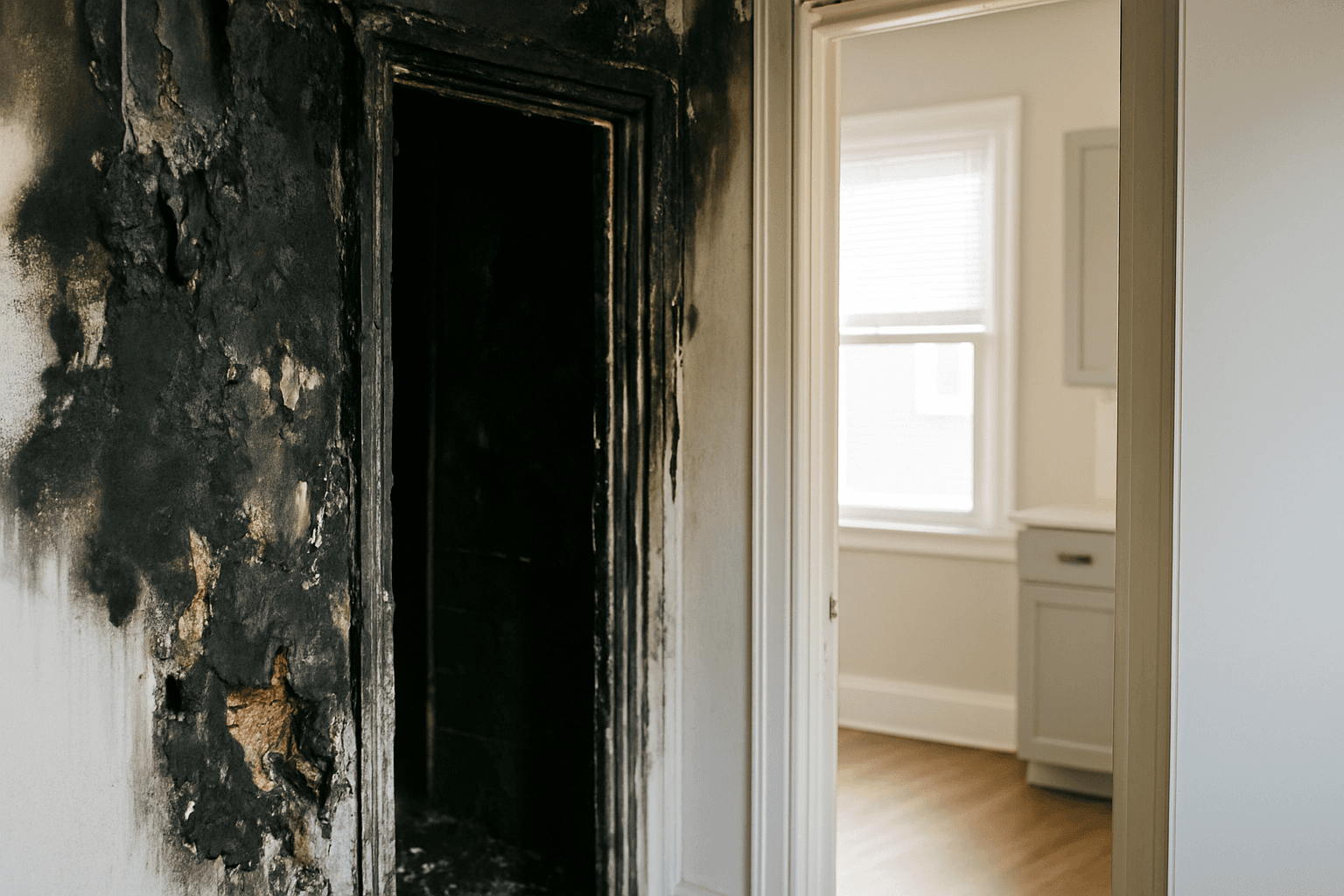
The flames were out in ten minutes. The fire department left, the kitchen got scrubbed, and the house looked almost normal by the weekend. Three weeks later, the smell is back, a hallway outlet stopped working, and the ceiling upstairs has a faint brown stain. Fire damage rarely stops where the fire did. Here is how to recognize the signs in a Denver home before a small event turns into a large repair.
Key Takeaways
- Smoke, heat, and suppression water spread damage well beyond the room where a fire started.
- Visible signs include soot lines, discoloration, warped surfaces, and sticky or powdery residue.
- Hidden signs show up as lingering odor, soot in ducts, dead outlets, soft drywall, and mold.
Why Fire Damage Hides After the Flames Are Out
Most homeowners judge fire damage by what burned. Restoration crews judge it by where the smoke went, how hot the air got, and how much water was used. NFPA research on home structure fires counts an average of 328,590 home fires a year in the United States. Those fires cause $8.9 billion in direct property damage annually. A large share of that loss comes from smoke and water, not flame.
Smoke and heat travel farther than fire
Hot smoke rises, spreads across ceilings, and pushes into every open doorway and duct. It cools on surfaces far from the fire and leaves soot behind. Heat alone can soften paint, loosen adhesives, and crack glass in rooms that never saw a flame. The U.S. Fire Administration notes that a modern structure fire can reach flashover in 3 to 5 minutes. Even a fire that was caught early moved a lot of heat and smoke through the house in that window.
Suppression water starts a second problem
Firefighters and extinguishers put water and chemicals into walls, floors, and insulation. That moisture does not leave on its own. Within 24 to 48 hours, damp drywall and framing can start growing mold. Many "fire damage" repairs are really water and mold repairs that began the day of the fire.
Visible Signs of Fire Damage You Can Spot Today
Start with a slow walk through every room, including rooms far from where the fire was. Bring a flashlight and look at surfaces from a low angle. Raking light shows soot films and texture changes that overhead light hides. A crew does this same walk-through first when a homeowner calls about fire damage signs near me Denver CO. You can do it yourself today.
Soot lines and discoloration
Look for a horizontal line of gray or black on upper walls. That is where the smoke layer sat. Check the tops of door frames, the upper corners of rooms, and the ceiling around light fixtures. Yellow or brown staining on white paint is a sign of heat and smoke exposure, even when there is no visible soot.
Warped, bubbled, or cracked surfaces
Heat bubbles paint and lifts wallpaper. Vinyl flooring curls at the seams. Laminate countertops delaminate at the edges. Window glass can show hairline cracks or a cloudy film. Plastic switch plates and outlet covers warp or discolor. Any of these in a room near the fire points to heat that reached well past the burn area.
Wet smoke versus dry smoke residue
Not all soot looks the same. A low-temperature, smoldering fire, such as burning plastics or upholstered furniture, leaves wet smoke. It is thick, sticky, and smears when wiped. A fast, hot fire that burned wood or paper leaves dry smoke. It is powdery and easier to clean but spreads into every crevice. Knowing which one you have tells a restoration crew which cleaning method will work.
Hidden Signs Most Denver Homeowners Miss
These are the signs behind most "fire damage signs near me Denver CO" searches. They show up weeks after the homeowner thought the problem was handled.
Lingering odor after cleaning
If the smoke smell returns on warm afternoons or when the furnace kicks on, soot is still in the house. Odor hides in attic insulation, carpet pad, inside wall cavities, and in the HVAC system. Surface cleaning and air fresheners do not fix it. Thermal fogging, ozone or hydroxyl treatment, and sealing of affected surfaces are what remove it.
Soot inside the HVAC system
A running furnace or air conditioner pulls smoke through the return vents and pushes it into every room. Pull a register cover and look inside the duct with a flashlight. Check the filter for gray or black buildup. If the ducts are coated, every heating cycle through a Front Range winter redistributes that residue.
Electrical warning signs
Heat damages wire insulation inside walls without any visible sign on the outside. Watch for outlets that stopped working and breakers that trip without an obvious cause. Flickering lights or a faint burning smell near a switch are also red flags. Any of these after a fire needs an electrician before you keep using that circuit.
Soft drywall, sagging ceilings, and mold
Push gently on drywall near the fire area and in the rooms below any firefighting activity. Soft spots, bulges, or a sagging ceiling mean water got in. A musty smell or dark spotting along baseboards within a week or two points to mold. GIMA Renovation treats every fire call as a water call too, and checks moisture levels in framing before anything gets closed up.
Signs of Fire Damage in Older Denver Homes
Denver's housing stock includes Victorians, Denver Squares, Tudors, bungalows, and mid-century ranches. Each era hides fire damage differently.
Older homes with plaster and lath hold smoke odor in the plaster itself and in the air gaps behind it. Balloon-framed walls in pre-1930s houses let smoke and heat rise straight from the basement to the attic. Original wiring that was already marginal can fail outright after heat exposure. Attics with blown-in or loose insulation soak up soot and smell like a campfire for months. If your home is more than 60 years old, ask the restoration crew to open the attic during the inspection. At least one wall cavity should be checked too.
Buying or Selling? How to Spot a Past Fire
A home that had a fire years ago can still carry the signs. Look for fresh paint in only one room or new drywall patches with a different texture. A single new window in an old frame, or replaced roof decking visible from the attic, also raises questions. A faint smoke smell inside closets or behind the furnace is a tell. Colorado sellers must disclose known material defects. A fire report from the Denver Fire Department is a public record. Request it through the city's non-emergency line at 3-1-1, or (720) 913-1311 from outside the city.
What to Do When You Find a Sign
Document everything first. Photograph soot lines, stains, warped surfaces, and anything inside ducts before cleaning. Call your insurance carrier within 24 hours of discovering new damage and open or update the claim. Then schedule a professional inspection. Waiting more than 72 hours after water exposure can raise restoration costs by 20 to 40 percent because mold takes hold.
Under Colorado law, you choose your restoration contractor, not your insurance company. A good contractor documents the damage in the format adjusters expect and handles both the cleanup and the rebuild. That continuity keeps the claim moving and avoids a second round of estimates.
Frequently Asked Questions
What counts as fire damage?
Fire damage includes direct burn damage plus smoke and soot residue and heat damage to materials. It also covers water damage from suppression and electrical or appliance damage. Insurance policies generally cover all of these under a fire claim, so document each type separately.
How much does fire damage restoration cost in Denver?
National averages run around $27,000 for a typical claim, with minor soot and smoke cleanup starting near $3,000. Denver cleanup-only jobs often land in the low thousands. Structural rebuilds after a serious fire can reach $50,000 or more. Severity, square footage, and how long water sat all drive the number.
Do I need a restoration company for a small kitchen fire?
If smoke reached more than one room, or water was used to put the fire out, yes. Those two conditions spread damage into places you cannot clean yourself. A small, contained flare-up with no smoke spread and no water can often be handled with careful cleaning.
Can you sell a house with fire damage?
Yes, but Colorado requires disclosure of known defects. Most buyers and lenders want proof that restoration was done professionally. Keep the fire report, the insurance claim records, and the contractor's completion documents together.
How fast should I act after finding a sign of fire damage?
Within a day for documentation and insurance, and within 72 hours for professional drying and cleaning. Mold begins growing in damp materials in 24 to 48 hours. Soot becomes harder to remove the longer it sits on surfaces.
Who is the biggest restoration company, and does size matter?
Size matters less than response time and whether the crew handles both mitigation and rebuild. A local team that can be on site the same day usually finishes faster than a national dispatcher. Carrying the project through reconstruction matters more than brand size.
Found a Sign? The 72-Hour Window Matters
Soot, odor, and moisture all get harder to remove with time. The first three days after a fire, or after you discover hidden damage, decide how large the repair becomes. Act inside that window and most homes come back fully.
GIMA Renovation provides fire damage restoration for Denver and Northern Colorado homes with 24/7 response. Smoke odor removal, moisture checks, and the full rebuild all happen under one roof. Our crews already serve homes across the Denver metro, from Capitol Hill Victorians to suburban ranches. Spotted even one of the signs above? Request a free inspection and we will tell you exactly what the fire left behind.