Mold Remediation Done Right in Greeley & Northern Colorado
Most mold in Greeley homes doesn't start with a horror-movie cloud on a wall. It starts with a slow under-sink leak nobody noticed, a basement that flooded two springs ago, or an ice-dam roof leak that was dried on the surface but left framing damp for weeks. By the time you see or smell it, mold has often been quietly growing behind drywall, in HVAC ducts, or in attic insulation for months. GIMA Renovation handles the entire response: inspection, moisture diagnosis, containment, HEPA filtration, removal, post-remediation verification, and the rebuild after — all from one local Greeley team.
Mold Remediation Services We Offer
Whether you have a small bathroom mold problem or a flooded basement with visible black growth across a finished wall, we handle the full scope — including the rebuild — under one written scope.
Mold Inspection & Assessment
Visual inspection, moisture meters, thermal imaging, and optional air or surface sampling for hidden growth.
Containment
Plastic barriers and negative-air machines so removing mold doesn't spread it to clean rooms.
HEPA Air Filtration
Air scrubbers run throughout the job to capture airborne spores released during demo and cleaning.
Mold Removal & Disposal
Affected drywall, insulation, carpet pad, and other porous materials are bagged, removed, and disposed of properly.
Antimicrobial Treatment
EPA-registered antimicrobials applied to remaining materials after physical removal.
Moisture Source Repair
Mold returns if the moisture source isn't fixed. We trace it back to a leak, grading issue, or condensation problem and address it.
Basement Mold
Greeley basements take the brunt of mold problems — foundation seepage, sump-pump failure, and high humidity.
Attic & Crawl Space Mold
Inadequate ventilation, ice-dam leaks, and improper bath-fan venting are the usual causes up high or down low.
HVAC & Duct Mold Cleaning
Mold inside ductwork distributes spores throughout the home every time the system runs. Specialized cleaning is required.
Reconstruction & Rebuild
Drywall, insulation, flooring, paint, and trim — rebuilt by the same crew, on the same written scope.
Insurance Documentation
Cause-of-loss, photos, scope, and equipment hours formatted for Colorado carriers and Xactimate adjusters.
Signs You May Have a Mold Problem
If any of these sound familiar for your Greeley home, it's worth booking a free inspection — before a small spot becomes a wall-out rebuild:
- A persistent musty or earthy smell — especially in basements, near HVAC returns, or after the system has been off for a while.
- Visible spots — black, green, gray, or white spots on drywall, ceilings, grout, baseboards, or under sinks.
- Bubbling or discolored paint, warped baseboards, or stained drywall — signs of moisture trapped behind the wall surface.
- A past water event — a flooded basement, a roof leak, an ice-dam, a slow plumbing leak, or a sump-pump failure that wasn't fully dried.
- Cold-like or allergy symptoms that get worse at home and better when family members leave, or worsening asthma in a child or older relative.
- Condensation problems — consistently fogged windows, damp insulation, or a humid basement.
If you've already spotted growth and you're wondering how urgent it really is, read what happens if you ignore mold in your Greeley home — it covers the structural, health, and financial reasons not to wait.
Our 7-Step Mold Remediation Process
Every mold job follows the same documented protocol, modeled on industry-recognized standards (IICRC S520 and ACAC guidelines). Your adjuster, your home inspector, and you can see exactly what was done at each step.
- Inspection & assessment. Visual inspection, moisture meters, and thermal imaging. Optional air or surface sampling if the source or extent is unclear. Identify the moisture source so it can be fixed.
- Containment. Plastic barriers and negative-air machines around the affected area, so spores released during removal don't travel through the rest of the home.
- HEPA air filtration. Air scrubbers run throughout the entire job, capturing airborne spores before they can recontaminate cleaned surfaces.
- Removal of mold-impacted material. Affected drywall, insulation, carpet pad, and other porous material are cut out, bagged, and removed in sealed containers.
- Cleaning & antimicrobial treatment. Remaining structural materials (framing, subfloor) are HEPA-vacuumed, wiped down, and treated with EPA-registered antimicrobials.
- Structural drying & moisture control. Dehumidifiers and air movers reduce humidity, and we address the underlying moisture source — a leak, a grading issue, condensation — so mold doesn't return.
- Post-remediation verification & rebuild. Visual clearance (and optional third-party air sampling) to confirm the area is back to normal levels. Then the same team rebuilds drywall, insulation, flooring, paint, and trim.
Mold Almost Always Starts with Water — Fix the Cause
Remediating mold without fixing the moisture source is a waste of your money. Mold will return in weeks. The most common moisture sources we find in Greeley:
- Slow plumbing leaks — under-sink supply lines, toilet wax rings, and aging shut-off valves.
- Past water damage that wasn't dried thoroughly — a flooded basement, a roof leak, a burst pipe handled DIY-style. Our water damage restoration team handles drying to dry-standard so mold doesn't establish in the first place.
- Roof leaks & ice dams — water travels along framing and shows up far from the entry point.
- Inadequate attic ventilation — warm interior air condenses on cold sheathing in winter.
- Bath-fan ducts venting into the attic — common in older Greeley homes; humid air dumps directly into insulation.
- Foundation seepage and poor yard grading — if water pools against the foundation, basement walls stay damp. Drainage and grading is often part of a complete fix.
- Firefighting water — mold from soaked materials is a common after-effect of house fires; covered as part of our fire damage restoration protocol.
Wondering whether you should try cleaning a small mold spot yourself or call us? We wrote a breakdown on DIY vs. professional restoration in Greeley — the cost principles apply to mold work too.
Mold & Your Health: What the Science Actually Says
Mold doesn't affect every person the same way. Some people live with visible mold for years without symptoms. Others — particularly children, the elderly, anyone with asthma or allergies, and those with weakened immune systems — can have significant reactions:
- Cold-like symptoms (cough, runny nose, sore throat) that improve when away from the home.
- Asthma flare-ups and increased rescue-inhaler use.
- Headaches, fatigue, and sinus congestion.
- Skin or eye irritation.
- Worsening of pre-existing respiratory conditions.
The EPA recommends professional mold remediation for any affected area larger than roughly 10 square feet (3' × 3'), and for any mold caused by sewage or contaminated water regardless of size. If you have a sensitive household member, the right call is usually to bring in containment and HEPA filtration sooner rather than later.
Homeowners Insurance & Mold in Colorado
Mold coverage on Colorado homeowners policies is more complicated than water or fire. Two things to know:
- Cause matters. Most policies cover mold only when it's the direct result of a covered loss — a burst pipe, a storm-driven roof leak, an appliance failure. Mold from long-term humidity, slow leaks left unrepaired, or poor ventilation is typically excluded.
- Coverage is often capped. Many Colorado policies cap mold coverage at $5,000 to $10,000 unless an endorsement is added. Catastrophic mold losses sometimes need to be handled outside the claim.
We document the cause-of-loss, scope, equipment hours, and post-remediation verification in the format Colorado carriers expect, so covered mold claims move quickly. If we suspect a job won't be covered, we tell you straight up before any work begins.
Why Greeley Homeowners Choose GIMA Renovation for Mold
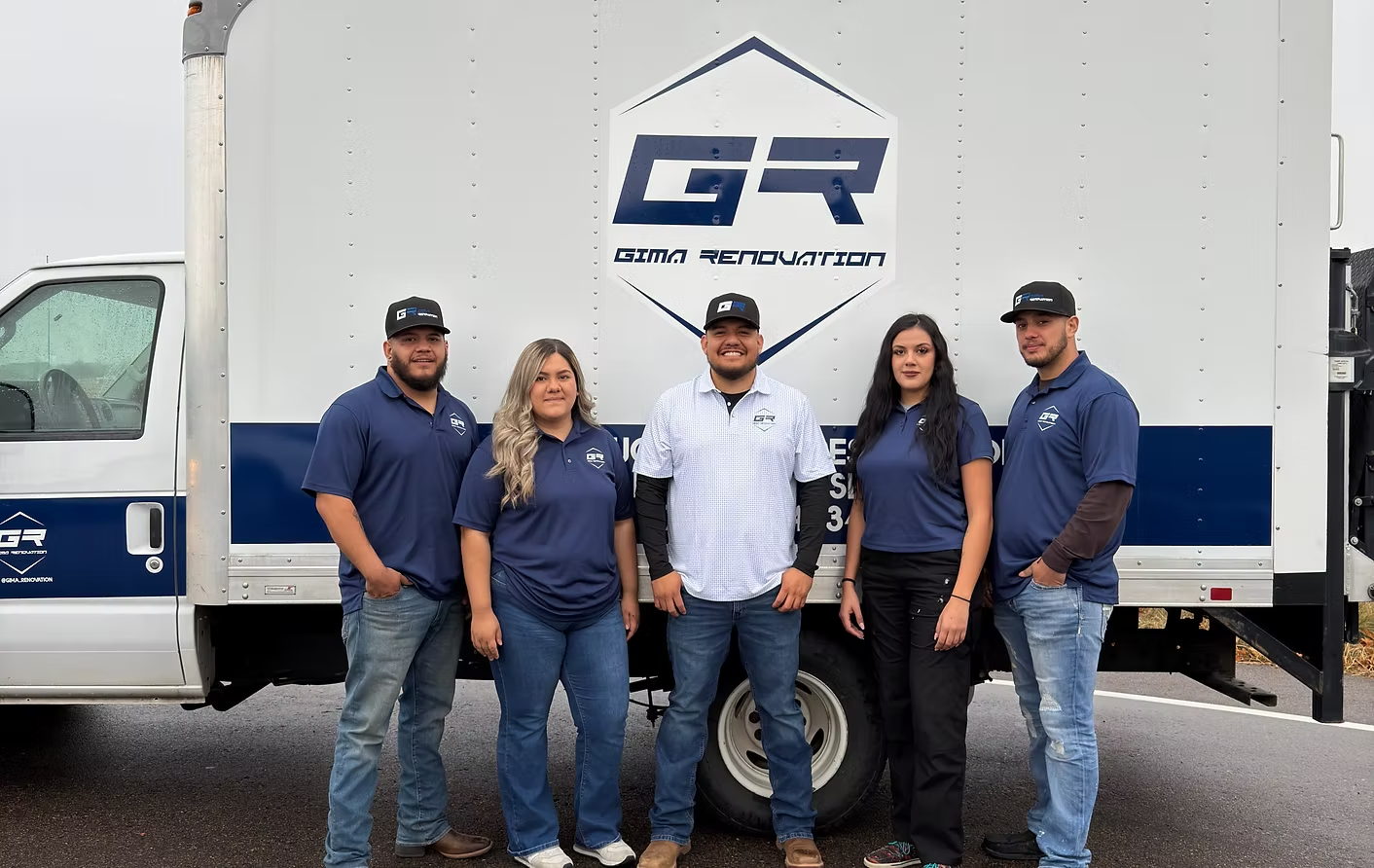
We're a local Greeley team, family-owned, licensed, and insured. We don't sub out the remediation, we don't sub out the rebuild, and we don't bury a claim under change-orders. Every mold remediation job includes:
- Free written inspection with a line-item scope — what is being removed, what is being treated, and what is being rebuilt.
- Containment & HEPA filtration on every job, even small ones — spores don't care how big the affected area is.
- Moisture-source identification: we don't just remove the mold, we fix the reason it grew.
- Optional post-remediation verification with third-party air sampling on larger jobs.
- One contractor for mitigation and rebuild — no handoff, no second estimate.
- Direct communication with your adjuster when you authorize it.
- Local Greeley phone number — we answer.
Service Area: Greeley & Northern Colorado
We handle mold remediation throughout Greeley, Evans, Windsor, Fort Collins, Loveland, Johnstown, Severance, Eaton, Kersey, La Salle, and Milliken, plus surrounding Weld and Larimer County communities. Don't see your town? Call (970) 836-4334 — if you're close to Greeley, we can probably help.
Frequently Asked Questions
How much does mold remediation cost in Greeley, CO?
Small, contained jobs (one bathroom, a 10-square-foot section behind a vanity) typically run $500 to $1,500. A flooded basement with widespread mold can run $3,000 to $8,000. Whole-house remediation involving HVAC and multiple rooms can exceed $10,000. We provide a written line-item estimate after a free inspection.
What are the signs I need mold remediation?
Persistent musty smells, visible black or green spots, bubbling paint or warped baseboards, a past water event that wasn't fully dried, or household members with worsening cold-like symptoms that improve when they leave the house.
Is black mold actually dangerous?
Not all dark mold is the toxic strain (Stachybotrys chartarum) people mean by “black mold,” but any visible mold growth should be addressed. Risk is highest for children, the elderly, and anyone with asthma or a weakened immune system. The EPA recommends professional remediation for any affected area larger than about 10 square feet.
Does homeowners insurance cover mold remediation?
Most Colorado policies cover mold only when it's caused by a covered loss (burst pipe, roof leak from a storm, appliance failure). Mold from long-term humidity, slow unrepaired leaks, or poor ventilation is typically excluded. Coverage is often capped at $5,000 to $10,000 unless an endorsement is added. We document cause and scope so covered claims move quickly.
Can I clean mold myself?
For small surface mold under ~10 square feet (a bit of grout, a window sill), a careful DIY clean is usually fine. For anything larger, mold inside walls or HVAC, sewage-related mold, or mold with a water-damage history, professional remediation is the right call. DIY without containment and HEPA filtration tends to spread spores to the rest of the home.
How long does mold remediation take?
1 to 3 days for a small single-room job; 3 to 7 days for a larger basement or multi-room job, plus additional time for reconstruction. HVAC involvement adds time.
Do you handle the rebuild after remediation?
Yes. The same team replaces drywall, insulation, flooring, baseboards, paint, and trim once the area passes post-remediation verification. One written estimate, one project manager, one finished home.
Suspect Mold in Your Home? Call GIMA Renovation Today
Call (970) 836-4334 or send a message through our contact page to schedule a free on-site mold inspection. We'll identify the moisture source, scope the remediation, and send a written, insurance-ready estimate — no obligation, no surprises.